
23 April 2024 · 5 min read · Excavation
At Wollongong City Excavation & Demolition, we understand that the foundation of any successful construction project lies in meticulous site preparation. As a civil contractor working across the Illawarra since 2014, we recognise the pivotal role that thorough groundwork plays in ensuring the smooth execution of a project — from the first survey peg to the day the builder hands over the keys.
How Does Site Preparation Protect Structural Integrity?
A robust foundation begins long before concrete is poured. Proper site preparation involves assessing the soil composition, levelling the ground, and implementing measures to mitigate risks such as subsidence, poor load-bearing capacity, or soil erosion. Through precise excavation and bulk earthworks, we create a stable platform upon which the structure can safely stand — for decades to come.
Poor site preparation is one of the most common causes of structural problems in new builds. Settlement cracking, drainage failures, and foundation movement can all be traced back to inadequate groundwork. Investing in thorough preparation at the start is far less expensive than rectifying structural defects after construction.
What Does Site Preparation Actually Involve?
The scope of site preparation varies depending on the project type, but across residential, commercial, and civil construction jobs in the Illawarra, the key activities typically include:
- Site clearing — removing vegetation, trees, existing structures, and debris to give the construction team a clean, obstruction-free workspace.
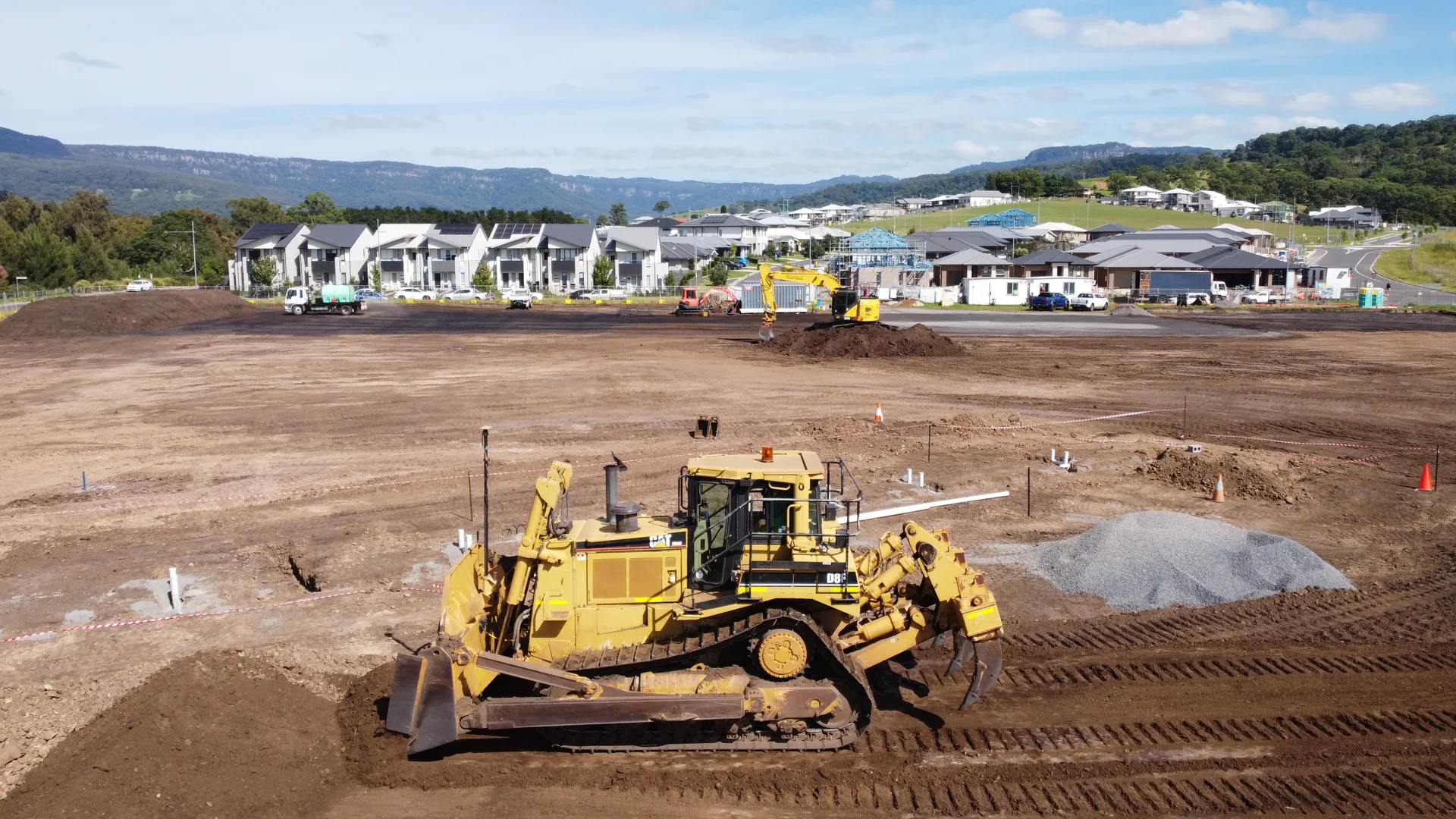
- Bulk and detailed excavation — cutting the site to the required design levels, including bulk earthmoving for large platforms and detailed excavation for footings, drainage, and underground services.
- Earthmoving and fill placement — importing and compacting engineered fill to build up areas that are low or need stabilisation, tested to specified compaction levels for structural adequacy.
- Drainage and erosion control — installing silt fencing, hay bales, and temporary drainage channels during earthworks to comply with NSW EPA requirements and protect surrounding waterways.
- Access road and hardstand construction — forming temporary or permanent access for construction traffic, including culverts and crossings.
- Trenching for services — excavating to the depths required for sewer, stormwater, water, gas, and electrical conduit installation.
Why Does Site Preparation Matter for Project Efficiency?
Efficiency in construction starts at the earthworks stage. When a site is properly cleared, levelled, and drained before the builder arrives, subsequent trades can work without delays caused by poor access, uneven ground, or standing water. Every day of delay on a construction project has a cost — in extended plant hire, idle labour, and deferred completion. Strategic site preparation minimises those risks.
From excavating trenches for utilities to creating compacted hardstands, every aspect of site preparation is designed to streamline what comes next. When we prepare a site, we think ahead to how the builder, concreters, and plumbers will use the space — and set it up accordingly.
What About Environmental and Safety Requirements?
Environmental sustainability is a core consideration in modern construction, and site preparation plays a key role in minimising impact. WCED adheres to NSW EPA guidelines for earthworks: implementing erosion and sediment control plans (ESCPs), managing soil stockpiles correctly, and disposing of contaminated material at licenced facilities. We also conduct site-specific risk assessments before earthworks begin to identify services, contamination, and geotechnical risks.
Safety on a site preparation project is equally non-negotiable. We conduct pre-start safety briefings, ensure dial-before-you-dig service locates are complete, and maintain clear exclusion zones around plant equipment. Whether it is a residential knockdown rebuild in Wollongong or a large civil earthworks project across the Illawarra, the same standard of safety planning applies.
Site preparation is not merely a preliminary step — it is the foundation upon which the entire project rests. If you are planning a construction project and need a reliable earthworks and civil contractor in the Illawarra, contact the WCED team for an obligation-free discussion and quote.
Frequently asked questions
- What is included in site preparation for a new home build?
- Site preparation typically includes site clearing (vegetation and structure removal), bulk and detailed excavation, fill placement and compaction, drainage and erosion control, and trenching for utilities. The exact scope depends on the existing site conditions and the builder's requirements.
- How long does site preparation take before construction can begin?
- Timelines depend on the project size and complexity. A standard residential block might require one to five days of site preparation. Larger civil or commercial projects may require weeks of earthworks. Factors such as rock, poor soils, or wet weather can extend the schedule.
- Do I need council approval for site earthworks?
- In most cases, yes. Earthworks are typically covered under your construction certificate or development approval. Significant bulk earthworks may require a separate earthworks plan approved by your certifier or council. Your contractor can advise on what documentation is needed.
- Can WCED handle both demolition and site preparation for a knockdown rebuild?
- Yes. WCED provides full-service demolition and civil earthworks, so we can handle the demolition, asbestos removal (if required), and all site preparation work as a single engagement — reducing the number of contractors your builder needs to coordinate.